HomeKnowledge Hub › Import & Export Guide
🌍 International Trade · 2026

Import & Export of Goods in India: The Complete Guide

Every dimension of cross-border trade on one page — IEC, customs duties, GST on imports and exports, FEMA and RBI payment realisation, income tax, the step-by-step procedures and 40 FAQs. Written by Chartered Accountants advising importers and exporters across Hapur, Ghaziabad, Noida, Delhi NCR and worldwide.

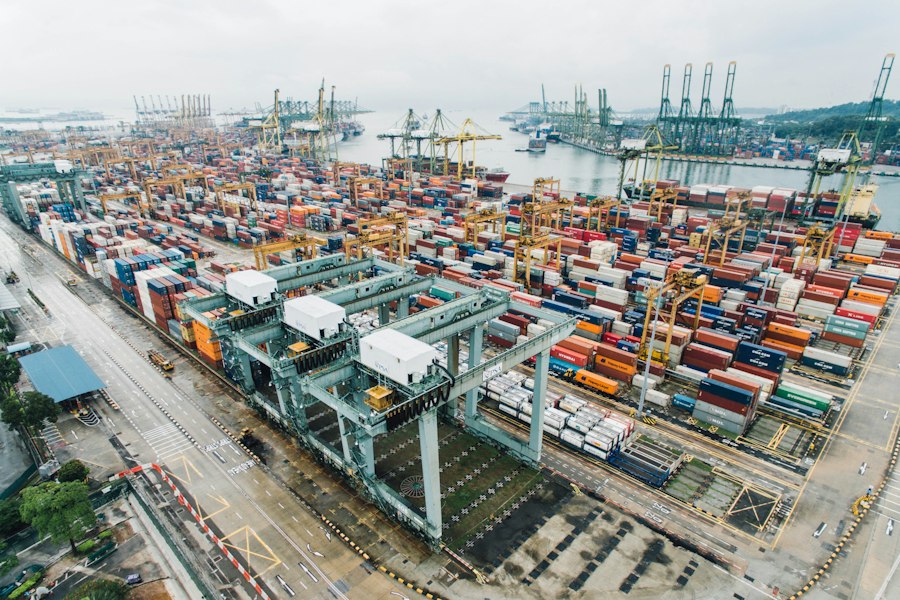
Container ship and port handling import and export cargo for international trade from India
🌐 5 LawsCustoms · GST · FEMA
RBI · Income Tax
Overview Getting Started Customs Duties GST on Trade FEMA & RBI Payment Realisation Income Tax Documents Perfect Chronology Procedures 40 FAQs
1

Five laws govern every shipment

Importing or exporting goods from India is never about a single rulebook. Each shipment touches five distinct legal regimes at once — and a misstep in any one can stop your cargo, block your money or trigger a penalty. Understanding how they fit together is the foundation of smooth, compliant trade.

🛃
CustomsDuty, valuation & clearance of goods at the border.
🧾
GSTIGST on imports; zero-rating of exports.
💱
FEMARules on foreign exchange & cross-border dealings.
🏦
RBIPayment realisation & reporting via banks.
⚖️
Income TaxTaxation of trade profits & transfer pricing.
🌍 The big picture: Customs governs the goods at the border, GST governs the tax on those goods, and FEMA + RBI govern the money that flows in or out. Income tax then taxes the profit. Get all four moving in sync and trade is effortless; let one fall out of step and the whole transaction stalls.

2

Getting started — what you need

Before your first shipment, these registrations must be in place. With documents ready, a new importer-exporter can typically be fully set up within two to three weeks.

🔢
IEC Code10-digit PAN-based code from DGFT — mandatory for all trade.
🧾
GST RegistrationRequired to export, file LUT and claim refunds.
🖥️
ICEGATE LoginCustoms portal for filing shipping bills & bills of entry.
🏦
AD Code RegistrationBank's Authorised Dealer code, registered at each port.
📋 You may also need an RCMC (Registration-Cum-Membership Certificate) from the relevant Export Promotion Council to claim Foreign Trade Policy benefits, plus any product-specific licences or certifications for restricted goods.
3

Customs duties — types & how they stack

When goods enter India, customs duty is levied on the assessable value (generally the CIF value — cost, insurance and freight). Several duties can apply together, and they stack in a specific order. Rates depend entirely on the goods' HSN classification.

Duty / LevyWhat it isTypical basis & rateCreditable?
Basic Customs Duty (BCD)Core customs levy on imported goodsOn assessable (CIF) value; rate varies by HSN — commonly 0%–40%No — adds to cost
Social Welfare SurchargeSurcharge funding social welfareUsually 10% of BCDNo
IGST on importsGST levy on imported goodsOn (assessable value + BCD + other duties); rate = the good's GST rate (commonly 5%/12%/18%/28%)Yes — ITC available
GST Compensation CessCess on specified goods (e.g. tobacco, certain vehicles)On (assessable value + BCD)Yes — limited use
Agriculture Infra & Dev Cess (AIDC)Cess on specified itemsOn assessable value, for notified goodsNo
Anti-Dumping DutyProtects against goods dumped below fair valueProduct & country specific, as notifiedNo
Safeguard DutyTemporary protection against import surgesAs notified for specific goodsNo
Countervailing Duty (CVD)Offsets foreign export subsidiesAs notifiedNo
⚠️ Rates change frequently through notifications and Budget announcements, and vary by HSN code and country of origin (preferential rates apply under free trade agreements). Always confirm the live rate for your specific product before costing a shipment.

How import duty stacks — a worked example

Illustration only · assumes BCD 10%, SWS 10% of BCD, IGST 18%. Actual rates depend on HSN.
Assessable (CIF) value of goods₹10,00,000
Basic Customs Duty @ 10%₹1,00,000
Social Welfare Surcharge @ 10% of BCD₹10,000
Value for IGST (10,00,000 + 1,00,000 + 10,000)₹11,10,000
IGST @ 18% (creditable)₹1,99,800
Total landed duty cost₹3,09,800
💡 Of the ₹3,09,800, the IGST of ₹1,99,800 is generally recoverable as input tax credit by a registered importer — so the real sunk duty cost here is about ₹1,10,000 (BCD + SWS). This distinction is critical when pricing imported goods.
4

GST on imports & exports

GST treats the two directions of trade very differently — imports are taxed, exports are relieved of tax entirely.

📥

Imports — Taxed

  1. IGST applies on the assessable value plus BCD and other duties, at the good's GST rate.
  2. Credit available — a registered importer can claim the IGST paid as input tax credit.
  3. Reverse charge may apply on import of certain services associated with the goods.
  4. Net effect — IGST is largely recoverable, so it's a cash-flow item rather than a permanent cost.
📤

Exports — Zero-Rated

  1. Zero-rated supply — exports bear no net GST.
  2. Option A: Export under LUT — no IGST paid upfront; claim refund of unutilised input credit.
  3. Option B: Pay IGST & refund — pay IGST on export, then claim it back via the shipping bill.
  4. Best for cash flow — most regular exporters file an LUT (form RFD-11) once a year.

Key takeaway: exporting under an LUT is almost always the most cash-efficient route — you neither block working capital in IGST nor wait for a refund. Exporters should file the LUT at the start of each financial year.
International trade finance and foreign exchange payment realisation for Indian exporters

Your goods may clear customs in days — but if the money isn't realised correctly under FEMA, the transaction is never truly complete.

5

FEMA & RBI — governing the money

While customs governs the goods, FEMA (Foreign Exchange Management Act) and the RBI govern the foreign currency that flows in and out. Every import payment and export receipt is tracked by your Authorised Dealer (AD) bank and reported to the RBI. These are the rules that matter most:

Export proceeds realisationPayment for exports must generally be realised and repatriated to India within the prescribed period from the date of export, through banking channels.⏱ Generally within 9 months
Import payment timelinePayment for imports should generally be completed within the prescribed period from the date of shipment; advance remittances are subject to RBI conditions.⏱ Generally within 6 months
EDPMSThe Export Data Processing and Monitoring System through which banks track that every export's proceeds are realised and the shipping bill is closed.
IDPMSThe Import Data Processing and Monitoring System that matches each import payment to the corresponding bill of entry, preventing over-remittance.
Authorised Dealer (AD) bankAn RBI-licensed bank through which all forex dealings route. It ensures FEMA compliance and reports transactions to the RBI.
e-BRC / FIRCThe electronic Bank Realisation Certificate and Foreign Inward Remittance Certificate evidence that export proceeds were received — essential for incentives.
⚠️ FEMA is where many traders slip: goods can clear and the buyer can pay, but if the bank doesn't close the entry in EDPMS/IDPMS within the timeline, the transaction shows as an open contravention. Non-realisation of export proceeds within the FEMA period can attract penalties — so payment realisation must be tracked as carefully as the shipment itself.
6

Methods of realising payment

International trade payments balance two competing needs — the exporter wants payment certainty, the importer wants delivery certainty. These are the established methods, ordered roughly from most secure for the exporter to least:

💵
Advance PaymentBuyer pays before shipment — safest for the exporter. Goods must ship within the RBI-prescribed period.
📜
Letter of Credit (LC)The buyer's bank guarantees payment on presentation of compliant documents — the workhorse of secure trade.
📑
Documentary CollectionBanks exchange shipping documents against payment (D/P) or acceptance (D/A). Cheaper than an LC, moderate risk.
🏦
Open Account / WireGoods shipped first, payment later by telegraphic transfer — common between trusted partners.
💳
Online Payment GatewayFor small-value exports, RBI permits realisation through notified payment intermediaries within limits.
🤝
Third-Party PaymentPayment to/from someone other than the named party — allowed under specific RBI conditions and documentation.
💡 Whatever the method, proceeds must come through banking channels and be evidenced by an e-BRC/FIRC so the bank can close the entry in EDPMS — without that, you cannot claim export incentives like RoDTEP or duty drawback.
7

Income tax on import-export trade

Profits from cross-border trade are taxed as ordinary business income, but international transactions bring a few extra obligations:

AspectHow it applies
Business incomeTrade profits are taxed at normal slab or corporate rates; all trade expenses, duties and freight are deductible.
Transfer pricingWhere you trade with associated enterprises abroad, prices must be at arm's length, with documentation and a Form 3CEB report above thresholds.
TDS / withholding on payments abroadPayments to non-residents (commission, royalty, technical fees) may require tax withholding under the Act read with the relevant DTAA.
SEZ deduction (sec 10AA)Units in Special Economic Zones may claim profit-linked deductions, subject to conditions and phase-out timelines.
Foreign tax creditTax paid abroad on the same income may be credited in India under the applicable DTAA, avoiding double taxation.
DocumentationMaintain invoices, shipping bills, bills of entry, e-BRCs and contracts — essential for assessments and refund claims.
🌐 If you trade with a parent or group company overseas, transfer pricing is the area to get right early — non-arm's-length pricing is among the most heavily scrutinised issues in cross-border taxation. Our international taxation and DTAA expertise covers exactly this.

A few practical income-tax points importers and exporters frequently overlook: customs duty paid is a deductible business expense, but only in the year the liability is incurred; foreign exchange gains and losses on trade receivables and payables are taxable or deductible and must be accounted correctly; and where you pay commission, royalty or technical fees to a non-resident, withholding tax at the rate under the Act or the applicable DTAA (whichever is more beneficial) must be deducted and a Form 15CA/15CB filed before remittance. Keeping your books, GST records and customs documents reconciled makes assessments and refund claims far smoother.

8

Master document checklist

Documentation is where most shipments get delayed. Keep every paper ready before the goods move — a missing certificate or a mismatched invoice can hold cargo at the port and stall your payment. Here is the complete set for each direction, grouped by stage.

📤

Export Documents

Registration & one-time
IEC certificate — Import Export Code from DGFT
GST registration & LUT (RFD-11) for the financial year
AD Code registration at the port of export
RCMC from the relevant Export Promotion Council
Commercial documents
Commercial invoice — value, terms, Incoterm, buyer details
Packing list — contents, weight, dimensions per package
Purchase order / sales contract with the foreign buyer
Proforma invoice issued before confirmation
Shipping & customs
Shipping Bill — filed on ICEGATE (the master export document)
Bill of Lading / Airway Bill — carrier's receipt & title document
Certificate of Origin — preferential (FTA) or non-preferential
Insurance certificate — for CIF / CIP terms
Inspection / quality certificate — where the buyer or law requires
Payment & closure
Letter of Credit (if applicable) & bank documents
e-BRC / FIRC — proof of realisation, for incentives & EDPMS closure
📥

Import Documents

Registration & one-time
IEC certificate from DGFT
GST registration — to claim IGST credit on imports
AD Code & bank account with an Authorised Dealer bank
Commercial documents
Commercial invoice from the overseas supplier
Packing list matching the invoice
Purchase order / contract with agreed Incoterms
Shipping & customs
Bill of Entry — filed on ICEGATE (the master import document)
Bill of Lading / Airway Bill from the carrier
Certificate of Origin — to claim preferential duty under an FTA
Insurance certificate for the consignment
Import licence / BIS / FSSAI — for restricted or regulated goods
Technical literature / catalogue — to support HSN classification
Duty & payment
Duty payment challan — BCD, IGST & cess as assessed
Bank remittance documents — matched to the bill of entry in IDPMS
📌 Golden rule of documentation: every figure must agree across all documents — the value, quantity, weight and description on the invoice, packing list, shipping bill/bill of entry and bill of lading must match exactly. A single inconsistency is the most common cause of customs queries, demurrage charges and payment delays.
9

The perfect chronology — hassle-free trade

Doing the right things in the right order is what separates smooth trade from stuck cargo and blocked payments. This is the ideal sequence we guide clients through — follow it and nearly every common problem is avoided before it arises.

PHASE 1

Foundation — before any deal

Weeks 1–3 · one-time
Apply for IECGet your DGFT Import Export Code — the licence to trade.
GST registration & LUTRegister under GST and file your LUT for zero-rated exports.
Open an AD bank accountChoose an Authorised Dealer bank and register the AD Code at your port.
ICEGATE & RCMCRegister on the customs portal and get your RCMC from the Export Promotion Council.
PHASE 2

Deal structuring — per transaction

Before order confirmation
Confirm HSN & dutyClassify the goods correctly and cost in all duties and GST upfront.
Agree IncotermsDecide who bears freight, insurance and risk (FOB, CIF, etc.).
Fix payment termsChoose LC, advance or open account based on trust and risk.
Sign a clear contractDocument price, quantity, delivery, currency and dispute terms.
PHASE 3

Execution — moving the goods

Shipment stage
Raise matching documentsInvoice, packing list — every figure identical across papers.
File on ICEGATEShipping Bill (export) or Bill of Entry (import) with correct details.
Customs clearanceExamination, duty payment, and Let Export Order / Out of Charge.
Arrange logistics & insuranceBook the carrier and cover the consignment in transit.
PHASE 4

Closure — completing compliantly

Post-shipment · within FEMA timelines
Realise / remit paymentReceive export proceeds (9 months) or pay imports (6 months) via the AD bank.
Obtain e-BRC / reconcileGet the e-BRC for exports; match import payment to bill of entry in IDPMS.
Claim benefitsRoDTEP, duty drawback and ITC refund for exports; IGST credit for imports.
Close the entryEnsure the bank closes the shipping bill in EDPMS — the transaction is now complete.
The discipline that prevents 90% of problems: never let goods move before Phase 1 is fully complete, never confirm a deal before Phase 2 is locked, and treat Phase 4 (payment realisation and closure) as seriously as the shipment itself. An open EDPMS/IDPMS entry is an unfinished transaction in the eyes of the RBI, however long ago the goods left.
🌐

Incoterms — who bears what

Incoterms are the internationally recognised rules that define exactly where the seller's responsibility ends and the buyer's begins — for cost, risk and insurance. Agreeing the right one upfront prevents the most common cross-border disputes. The most used in Indian trade:

EXW
Ex WorksBuyer takes over at the seller's premises and bears all cost and risk thereafter.
FOB
Free On BoardSeller delivers goods loaded onto the vessel; risk passes to buyer at that point.
CIF
Cost, Insurance & FreightSeller pays freight and insurance to the destination port; risk passes on loading.
CFR
Cost & FreightSeller pays freight to destination but buyer arranges insurance.
DAP
Delivered At PlaceSeller delivers to the agreed destination; buyer handles import clearance.
DDP
Delivered Duty PaidSeller bears everything including import duties — maximum seller obligation.
FCA
Free CarrierSeller hands goods to the buyer's nominated carrier at a named place.
CIP
Carriage & Insurance PaidSeller pays carriage and insurance to destination for any transport mode.
💡 The Incoterm directly affects your customs value too — under CIF the freight and insurance are already in the price, while under FOB they are added separately to arrive at the assessable value. Always state the agreed Incoterm clearly on the invoice and contract.
10

Step-by-step procedures

The end-to-end flow for each direction of trade, from registration to closing the transaction:

📤

Export Procedure

  1. Obtain IEC from DGFT and complete GST registration.
  2. File LUT (RFD-11) to export without paying IGST, and register your AD Code at the port.
  3. Prepare documents — commercial invoice, packing list, certificate of origin and any licences.
  4. File the Shipping Bill on ICEGATE (also the claim for IGST refund & incentives).
  5. Customs clearance — examination and issue of the Let Export Order.
  6. Goods shipped and the carrier issues the Bill of Lading / Airway Bill.
  7. Realise payment within the FEMA timeline and obtain the e-BRC.
  8. Claim incentives — RoDTEP, duty drawback and ITC refund; bank closes the entry in EDPMS.
📥

Import Procedure

  1. Obtain IEC and GST registration; identify the correct HSN and applicable duties.
  2. Place the order and agree Incoterms (who bears freight, insurance, risk).
  3. Arrange payment terms — LC, advance or open account, through your AD bank.
  4. Goods shipped by the supplier with invoice, packing list and Bill of Lading.
  5. File the Bill of Entry on ICEGATE and classify the goods.
  6. Pay customs duty & IGST as assessed.
  7. Customs clearance — examination and Out of Charge order; take delivery.
  8. Remit payment within the FEMA timeline; bank reconciles in IDPMS, and claim IGST credit.
11

40 frequently asked questions

A complete reference for importers and exporters in Hapur, Ghaziabad, Noida, Delhi NCR and beyond. Use the search box to jump to any topic.

Trading across borders? Make every law work in your favour.

From IEC and GST setup to customs, LUT, refunds, FEMA payment realisation and international taxation — Lalit Tyagi & Company guides importers and exporters across Hapur, Ghaziabad, Noida, Delhi NCR and worldwide.